


ATL, BTL, TTL Marketing
Marketing is a dynamic and multifaceted discipline that demands diverse strategies to effectively reach its target audiences. Among these strategies, ATL (Above The Line), BTL (Below The Line), and TTL (Through The Line) marketing are crucial approaches, each offering unique benefits and applications. This blog aims to explore the definitions, advantages, and best practices for implementing ATL, BTL, and TTL marketing, equipping businesses with insights to leverage these strategies effectively for achieving marketing goals.
Understanding ATL (Above The Line) Marketing
ATL marketing encompasses promotional activities aimed at a broad audience through mass media channels. Its primary objective is to enhance brand awareness and maximize audience reach.
Key Channels:
-
- Television: Utilized for its expansive audience reach and impactful visual and auditory engagement.
-
- Radio: Effective in targeting specific demographics based on station formats and listener demographics.
-
- Print Media: Includes newspapers and magazines, offering detailed and visually appealing ad placements.
-
- Outdoor Advertising: Encompasses billboards, transit ads, and posters in high-traffic locations to capture commuter and pedestrian attention.
-
- Cinema Advertising: Reach a captivated audience in a relaxed setting before movie screenings.
Advantages:
Wide Reach: Ideal for broad-reaching brand awareness campaigns that target millions.
-
- High Impact: Visual and auditory elements create strong emotional connections.
-
- Credibility: Mass media channels often instill trust and credibility among audiences.
Best practices:
-
- Audience Understanding: Thoroughly grasp audience demographics, preferences, and behaviors to select appropriate media channels.
-
- Creative Excellence: Invest in high-quality, attention-grabbing content that effectively communicates brand messages.
-
- Consistent Messaging: Ensure uniformity across all channels to strengthen brand recognition and trust.
Understanding BTL (Below The Line) Marketing
BTL marketing engages in direct and personalized promotional activities aimed at specific audience segments, emphasizing relationship building and immediate sales generation.
Key Channels:
-
- Direct Mail: Personalized letters, brochures, and postcards sent directly to potential customers.
-
- Email Marketing: Targeted campaigns to engage subscribers and nurture leads through personalized content.
-
- Social Media: Engages specific audience segments via targeted posts, ads, and community interactions.
-
- Experiential Marketing: Events, product demos, and in-store promotions create memorable brand experiences.
-
- Sponsorship and Promotions: Partnerships with events or special deals to attract and retain customers.
Advantages:
-
- Targeted Approach: Precision targeting based on demographics, behaviors, and preferences.
-
- Cost-Effectiveness: Generally more budget-friendly than ATL, making it accessible to small businesses.
-
- Measurable Results: Track campaign effectiveness through direct response rates and ROI.
Best practices:
-
- Data-Driven Strategies: Utilize customer data and analytics for highly targeted campaigns.
-
- Personalization: Tailor messages and offers to align with specific audience needs and interests.
-
- Engagement Focus: Create interactive experiences that deepen brand connections and foster loyalty.
Understanding TTL (Through The Line) Marketing
TTL marketing integrates both ATL and BTL strategies to create cohesive campaigns that maintain consistent brand messaging across all channels, leveraging the strengths of both approaches.
Key Channels:
-
- Integrated Campaigns: Combine mass media with direct marketing efforts for a unified strategy.
-
- Digital Marketing: Utilizes online platforms for broad reach (e.g., display ads) and targeted engagement (e.g., social media, email).
-
- Content Marketing: Distributing valuable content across various channels to attract and retain customers.
-
- Influencer Marketing: Collaborates with influencers to reach wide audiences while engaging with specific niches.
Advantages:
-
- Holistic Approach: Offers a comprehensive view of the customer journey, covering all touchpoints.
-
- Consistency: Delivers unified brand messaging across channels, reinforcing brand identity.
-
- Flexibility: Adapts and optimizes campaigns based on the performance of different elements.
Best Practices:
-
- Integrated Strategy Development: Align ATL and BTL efforts with overall business objectives.
-
- Cross-Channel Coordination: Ensure seamless collaboration across teams and channels for consistent messaging.
-
- Continuous Optimization: Monitors and analyzes campaign performance to make necessary adjustments for maximum effectiveness.
Comparing ATL, BTL, and TTL Marketing
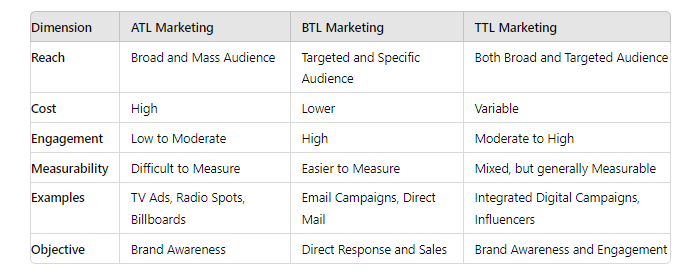
To better understand the differences and applications of ATL, BTL, and TTL marketing, let’s compare them across several key dimensions:
ATL, BTL, and TTL marketing are pivotal strategies that businesses can deploy to achieve diverse marketing goals effectively. By understanding their definitions, advantages, and best practices, businesses can tailor their marketing approaches to resonate with their target audiences more authentically and achieve sustainable growth in competitive markets. Leveraging these strategies strategically can not only enhance brand visibility and engagement but also drive significant business outcomes in the long term.
Choosing Between Them:
-
- Consider Your Objectives: If immediate sales and precise targeting are priorities, BTL and digital marketing may offer more focused results. For broader brand awareness and impact, ATL and TTL strategies can complement each other effectively.
-
- Budget: Digital marketing often offers more cost-effective options for smaller budgets, while ATL strategies require higher investment but can yield broad reach and brand prestige.
-
- Integration: TTL marketing blends the strengths of both ATL and BTL, offering a holistic approach that maintains consistent messaging across all channels.
Ultimately, the best approach depends on understanding your target audience, budget constraints, and specific marketing goals to choose the strategy that aligns most effectively with your business objectives.


ATL, BTL, TTL Marketing
Marketing is a dynamic and multifaceted discipline that demands diverse strategies to effectively reach its target audiences. Among these strategies, ATL (Above The Line), BTL (Below The Line), and TTL (Through The Line) marketing are crucial approaches, each offering unique benefits and applications. This blog aims to explore the definitions, advantages, and best practices for implementing ATL, BTL, and TTL marketing, equipping businesses with insights to leverage these strategies effectively for achieving marketing goals.
Understanding ATL (Above The Line) Marketing
ATL marketing encompasses promotional activities aimed at a broad audience through mass media channels. Its primary objective is to enhance brand awareness and maximize audience reach.
Key Channels:
-
- Television: Utilized for its expansive audience reach and impactful visual and auditory engagement.
-
- Radio: Effective in targeting specific demographics based on station formats and listener demographics.
-
- Print Media: Includes newspapers and magazines, offering detailed and visually appealing ad placements.
-
- Outdoor Advertising: Encompasses billboards, transit ads, and posters in high-traffic locations to capture commuter and pedestrian attention.
-
- Cinema Advertising: Reach a captivated audience in a relaxed setting before movie screenings.
Advantages:
Wide Reach: Ideal for broad-reaching brand awareness campaigns that target millions.
-
- High Impact: Visual and auditory elements create strong emotional connections.
-
- Credibility: Mass media channels often instill trust and credibility among audiences.
Best practices:
-
- Audience Understanding: Thoroughly grasp audience demographics, preferences, and behaviors to select appropriate media channels.
-
- Creative Excellence: Invest in high-quality, attention-grabbing content that effectively communicates brand messages.
-
- Consistent Messaging: Ensure uniformity across all channels to strengthen brand recognition and trust.
Understanding BTL (Below The Line) Marketing
BTL marketing engages in direct and personalized promotional activities aimed at specific audience segments, emphasizing relationship building and immediate sales generation.
Key Channels:
-
- Direct Mail: Personalized letters, brochures, and postcards sent directly to potential customers.
-
- Email Marketing: Targeted campaigns to engage subscribers and nurture leads through personalized content.
-
- Social Media: Engages specific audience segments via targeted posts, ads, and community interactions.
-
- Experiential Marketing: Events, product demos, and in-store promotions create memorable brand experiences.
-
- Sponsorship and Promotions: Partnerships with events or special deals to attract and retain customers.
Advantages:
-
- Targeted Approach: Precision targeting based on demographics, behaviors, and preferences.
-
- Cost-Effectiveness: Generally more budget-friendly than ATL, making it accessible to small businesses.
-
- Measurable Results: Track campaign effectiveness through direct response rates and ROI.
Best practices:
-
- Data-Driven Strategies: Utilize customer data and analytics for highly targeted campaigns.
-
- Personalization: Tailor messages and offers to align with specific audience needs and interests.
-
- Engagement Focus: Create interactive experiences that deepen brand connections and foster loyalty.
Understanding TTL (Through The Line) Marketing
TTL marketing integrates both ATL and BTL strategies to create cohesive campaigns that maintain consistent brand messaging across all channels, leveraging the strengths of both approaches.
Key Channels:
-
- Integrated Campaigns: Combine mass media with direct marketing efforts for a unified strategy.
-
- Digital Marketing: Utilizes online platforms for broad reach (e.g., display ads) and targeted engagement (e.g., social media, email).
-
- Content Marketing: Distributing valuable content across various channels to attract and retain customers.
-
- Influencer Marketing: Collaborates with influencers to reach wide audiences while engaging with specific niches.
Advantages:
-
- Holistic Approach: Offers a comprehensive view of the customer journey, covering all touchpoints.
-
- Consistency: Delivers unified brand messaging across channels, reinforcing brand identity.
-
- Flexibility: Adapts and optimizes campaigns based on the performance of different elements.
Best Practices:
-
- Integrated Strategy Development: Align ATL and BTL efforts with overall business objectives.
-
- Cross-Channel Coordination: Ensure seamless collaboration across teams and channels for consistent messaging.
-
- Continuous Optimization: Monitors and analyzes campaign performance to make necessary adjustments for maximum effectiveness.
Comparing ATL, BTL, and TTL Marketing
To better understand the differences and applications of ATL, BTL, and TTL marketing, let’s compare them across several key dimensions:
ATL, BTL, and TTL marketing are pivotal strategies that businesses can deploy to achieve diverse marketing goals effectively. By understanding their definitions, advantages, and best practices, businesses can tailor their marketing approaches to resonate with their target audiences more authentically and achieve sustainable growth in competitive markets. Leveraging these strategies strategically can not only enhance brand visibility and engagement but also drive significant business outcomes in the long term.
Choosing Between Them:
-
- Consider Your Objectives: If immediate sales and precise targeting are priorities, BTL and digital marketing may offer more focused results. For broader brand awareness and impact, ATL and TTL strategies can complement each other effectively.
-
- Budget: Digital marketing often offers more cost-effective options for smaller budgets, while ATL strategies require higher investment but can yield broad reach and brand prestige.
-
- Integration: TTL marketing blends the strengths of both ATL and BTL, offering a holistic approach that maintains consistent messaging across all channels.
Ultimately, the best approach depends on understanding your target audience, budget constraints, and specific marketing goals to choose the strategy that aligns most effectively with your business objectives.


INDIA

USA

UK

Saudi Arabia